By
By 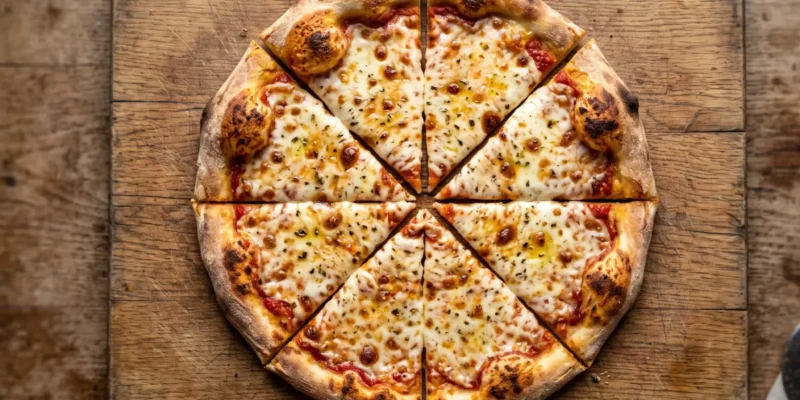
Quick answer: A pizza slice ranges from about 110 to over 700 calories, because “a slice” is not a fixed size. An Australian chain slice cut into eight (roughly 50 to 60g) runs about 115 to 180 calories for standard cheese and single-topping pizzas. The 285-calorie figure you see online describes a US slice nearly double the weight.
Key takeaways
- An Australian Domino’s cheese slice is about 125 calories (523 kJ). A US cheese slice is about 285 calories.
- Slice weight moves the number more than toppings or crust do.
- Meat toppings add roughly 15 to 60 calories per slice. Vegetables add 10 to 25. Extra cheese or a stuffed crust adds 40 to 60.
- Get your real figure from the source: the chain’s calculator, the frozen box panel, or a food database.
Table of contents
- How many calories is a typical slice?
- Why is “a slice” a misleading unit?
- How do Australian slices compare with online numbers?
- Do toppings change the calorie count?
- Does the crust change the count?
- How many calories are in a whole pizza?
- How do I find the exact number for my pizza?
- Does pizza fit a normal diet?
- Conclusion
- FAQs
How many calories is a typical slice?
A typical slice sits between 110 and 330 calories, and Australian chain slices cluster at the lower end.
For a chain pizza cut into eight, expect roughly 115 to 180 calories per slice for standard cheese and single-topping pizzas. Meat-loaded slices run higher.
Very large or heavily loaded slices pass 500 calories, and oversized US food-court slices can top 700. The reason for the spread comes down to three things: slice weight, crust, and toppings, in that order of impact.
Why is “a slice” a misleading unit?
A slice only has meaning once you know the pie size and how many pieces it was cut into.
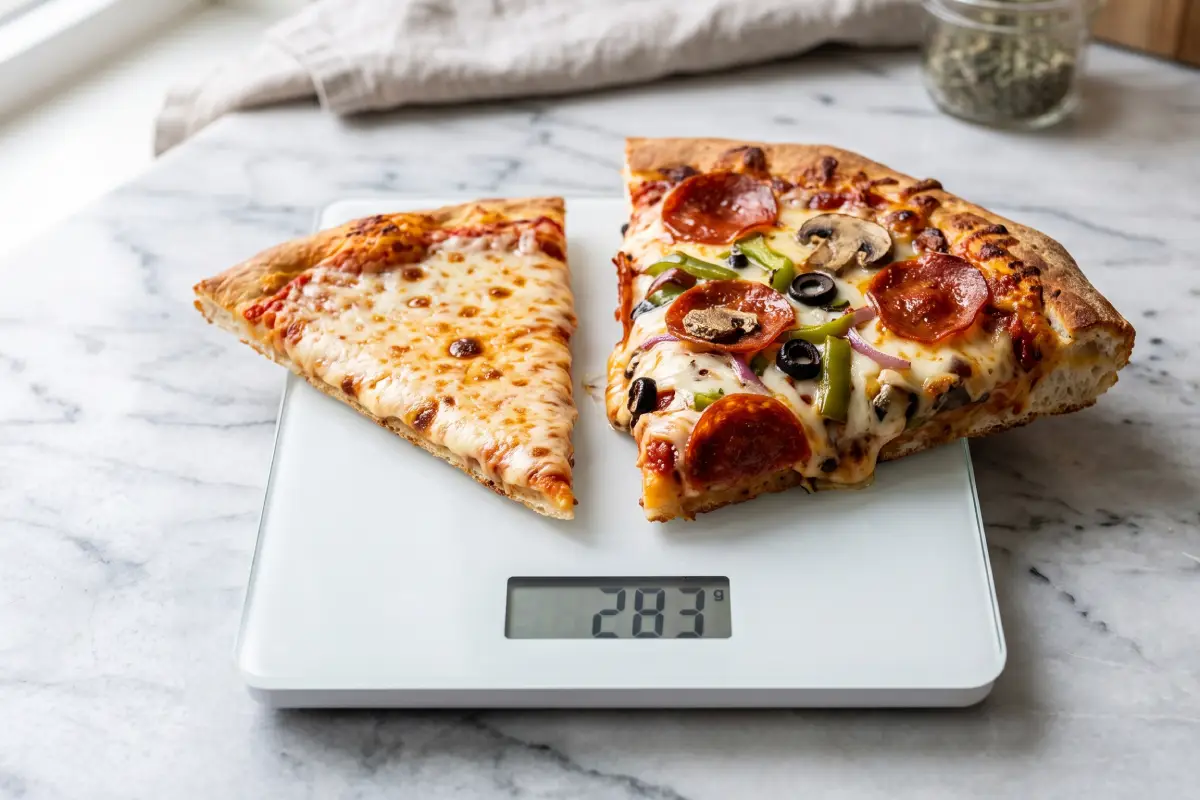
One eighth of a 25cm pizza and one eighth of a 45cm pizza are both “a slice,” at very different weights. Cut count alone shifts the maths: the same 35cm pizza cut into six pieces gives about 33% more calories per slice than the same pizza cut into eight.
This is why online figures scatter. A 52g Australian slice and a 106g US slice are the same food at two different weights, so the counts diverge before toppings enter the picture.
How do Australian slices compare with online numbers?
Australian slices are lighter on paper because local chains cut smaller pies into eight, not because the food itself is different.
Australia measures food energy in kilojoules, with nutrition panels referencing an average daily intake of 8700 kJ, close to 2080 calories. US content uses calories against a 2000-calorie reference, so the framing differs before the food does.
Domino’s Australia lists a classic-crust Simply Cheese slice at 125 calories (523 kJ) for a 52g serve. Its Pepperoni classic slice is 137 calories (575 kJ), and Ham & Cheese is 123 calories (515 kJ).
Calories by pizza slice: Australia vs common US figures
| Pizza slice | Region | Approx. slice weight | Calories | Kilojoules |
| Domino’s Spicy Vege Trio | AU | ~50g | 111 | 463 |
| Domino’s Simply Cheese (classic) | AU | 52g | 125 | 523 |
| Domino’s Pepperoni (classic) | AU | 52g | 137 | 575 |
| Domino’s Value Pepperoni (deep pan) | AU | 61g | 176 | 736 |
| Domino’s Big Three Meats | AU | ~85g | 310 | 1300 |
| Neapolitan Margherita | Traditional | ~90g | ~170 | ~711 |
| Generic cheese slice (USDA) | US | 106g | 285 | 1192 |
| Thin-crust cheese, 14″ cut into 8 | US | ~70g | ~220 | ~920 |
| Chicago deep dish | US | large | 500+ | 2090+ |
| Costco pepperoni | US | ~300g | ~720 | ~3010 |
Australian figures from Domino’s Australia and CalorieKing Australia. US and traditional-style figures from USDA FoodData Central via published nutrition guides. Neapolitan and thin-crust rows are approximate.
Do toppings change the calorie count?
Yes, but less than most people assume. Cheese sets the baseline and everything else adjusts from there.
Meat adds the most. Pepperoni and sausage bring extra fat, so a meat slice runs roughly 15 to 60 calories above the cheese version of the same pizza, with triple-meat slices going higher.
Vegetables barely register. A full vegetable topping adds only about 10 to 25 calories per slice, and it often lowers the total by displacing cheese.
Two additions catch people out: extra cheese or a cheese-stuffed crust adds around 40 to 60 calories per slice, and dipping sauces like garlic butter can add over 100 calories per small tub.
Does the crust change the count?
Yes. Crust drives carbohydrates, and thickness is the variable.
A standard cheese slice carries roughly 28 to 36g of carbs. Thin crust cuts that to about 20 to 25g and trims calories with it.
Deep pan and deep dish push carbs to 40 to 48g, so a deep-pan slice can outweigh a classic slice of the same pizza. Stuffed and cheesy crusts stack fat and carbs together, placing them at the top of the range. For the lowest count, thin crust with vegetable toppings is the reliable choice.
How many calories are in a whole pizza?
Multiply the per-slice figure by the number of slices, and remember most people eat more than one.
Consumption data shows the average adult eats about 2.5 to 3 slices in a sitting. At an Australian cheese slice of roughly 125 calories, three slices come to about 375 calories, before any drink or side.
Use the US 285-calorie slice and the same three slices read as 855 calories. That spread is the point: the right per-slice figure decides whether your meal logs at 375 or 855.
How do I find the exact number for my pizza?
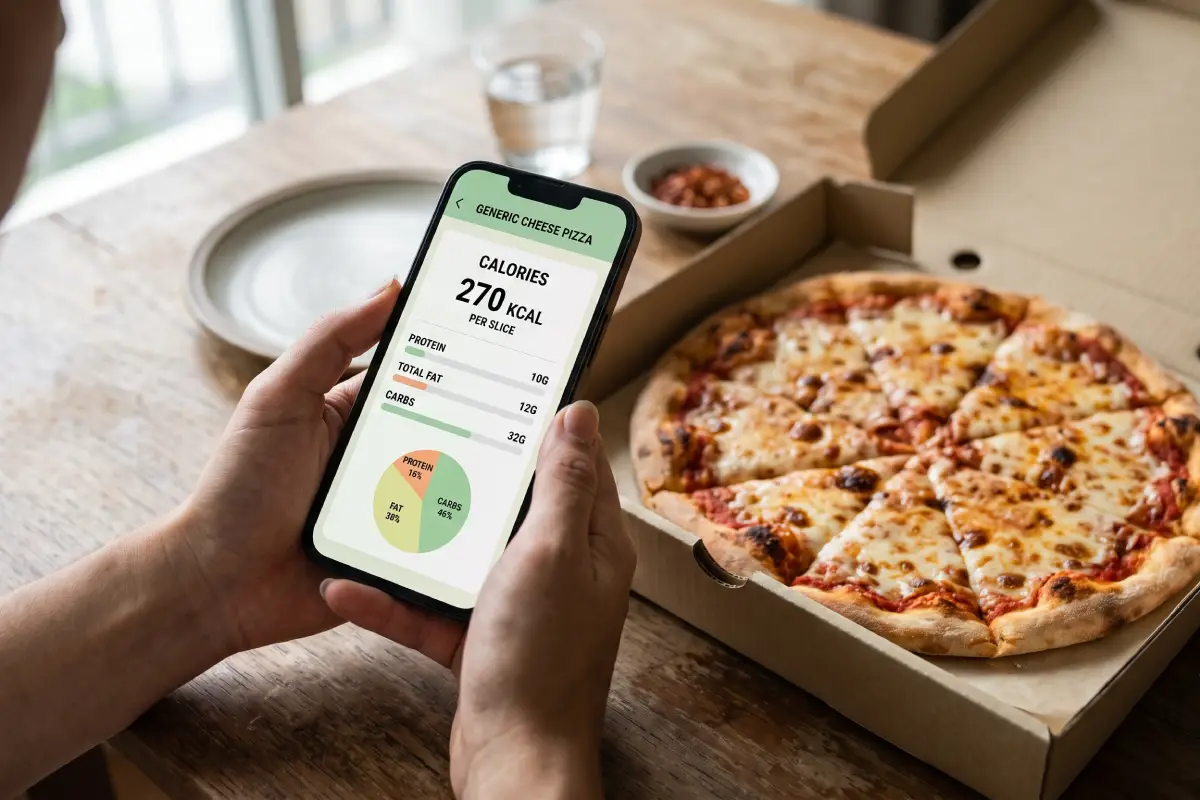
Match the source to where the pizza came from, and you get an accurate figure instead of an internet average.
- Chain order: Open the brand’s own nutrition page or calculator. Most major chains, including Domino’s and Pizza Hut, list per-slice calories and kilojoules for every base and topping.
- Frozen pizza: Read the nutrition panel and check the serving size, since many boxes count a serve as a fraction of the pizza rather than the whole thing.
- Homemade: Weigh the ingredients and look each one up in USDA FoodData Central, the US government’s public nutrient database, or the Australian food composition database.
- Independent pizzeria: Local pizzerias like Pizza Riviera in Rivervale, WA, rarely publish per-slice nutrition data, since menus are built around fresh, made-to-order toppings rather than standardised chain portions. With no published figures, estimate from the table above using style, crust and slice size.
Does pizza fit a normal diet?
Yes. Pizza is calorie-dense, and it also delivers protein and calcium.
It is higher in sodium and saturated fat than many meals, while the cheese adds protein and calcium and any vegetables add useful nutrients. A couple of slices as part of a varied week is ordinary eating.
How those calories get used depends partly on timing, which is central to the fasted or fed training debate for fat loss and muscle gain.
Knowing the calorie figure is about accurate tracking, not guilt at the table. If a dietitian has given you specific targets, follow those over any general article, because this guide answers a factual question rather than a personal nutrition plan.
Conclusion
There is no single answer, and the honest reply is that it depends. Slice weight does most of the work, then crust, then toppings.
For an Australian chain slice cut into eight, plan for roughly 115 to 180 calories for standard cheese and single-topping pizzas, with meat-heavy slices higher. The widely quoted 285-calorie figure describes a US slice nearly twice the weight, so treat it as a different serving rather than a mistake.
Find your real number by matching the source to your pizza. That single step corrects the biggest error people make when logging pizza.
FAQs
How many calories is in a plain cheese slice?
An Australian classic-crust cheese slice is about 125 calories (523 kJ). A larger US-style cheese slice is closer to 285 calories because it weighs almost twice as much.
How many calories are in a whole pizza?
Multiply the per-slice figure by the number of slices. An eight-slice Australian cheese pizza at about 125 calories a slice totals roughly 1000 calories for the whole pie.
Which pizza has the fewest calories per slice?
Thin crust with vegetable toppings. Among Australian chain options, lighter vegetable pizzas like Domino’s Spicy Vege Trio sit around 111 calories a slice.
Why do online calorie counts vary so much?
Because “a slice” is not a fixed size. A 52g slice and a 106g slice are the same food at different weights, so the calories differ before crust and toppings are counted.
Is pizza high in calories compared with other takeaway?
It is calorie-dense but portion-driven. One or two slices is moderate, while three or more slices plus a drink and sides adds up quickly.
Should I count calories or kilojoules?
In Australia, kilojoules are the standard unit on labels and menus, referenced against 8700 kJ a day. To convert, multiply calories by 4.184 to get kilojoules.