By
By 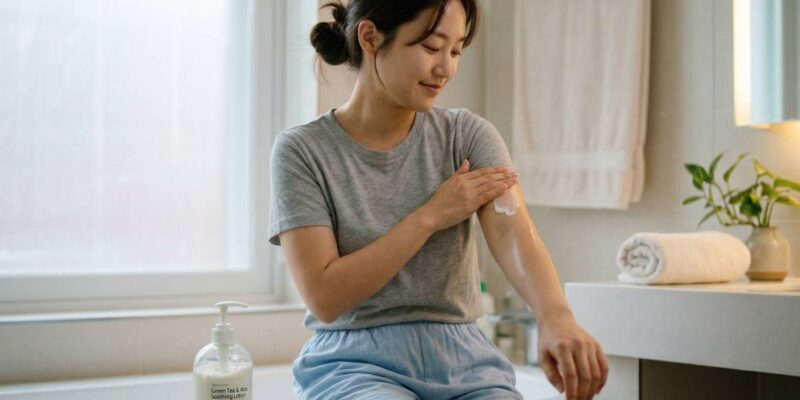
You’ve tried the lotions. You’ve done the scrubs. But your skin still feels rough, uneven, or dull after the shower.
The frustrating truth is that most Western body care routines treat skin care as an afterthought — a quick rinse and a pump of moisturiser on the way out the door. Meanwhile, Koreans have spent generations building a body skin philosophy that is layered, intentional, and deeply rooted in culture.
The solution is not a single miracle product. It is a complete system, and once you understand how it works, the results make total sense.
TL;DR: How Do Koreans Take Care of Their Body Skin?
Koreans maintain smooth, even-toned body skin through a multi-step ritual that begins with deep exfoliation using an Italy towel, followed by thorough cleansing, targeted moisturising with ingredient-rich products, and consistent sun protection. This routine is supported by a diet rich in collagen, fermented foods, and high water intake — treating skin health from the inside out.
Step 1: It Starts at the Bathhouse — Understanding Korean Skin Culture
Before we talk products and steps, it is important to understand why Korean body skin care is so effective. The habits are not just cosmetic. They are cultural.
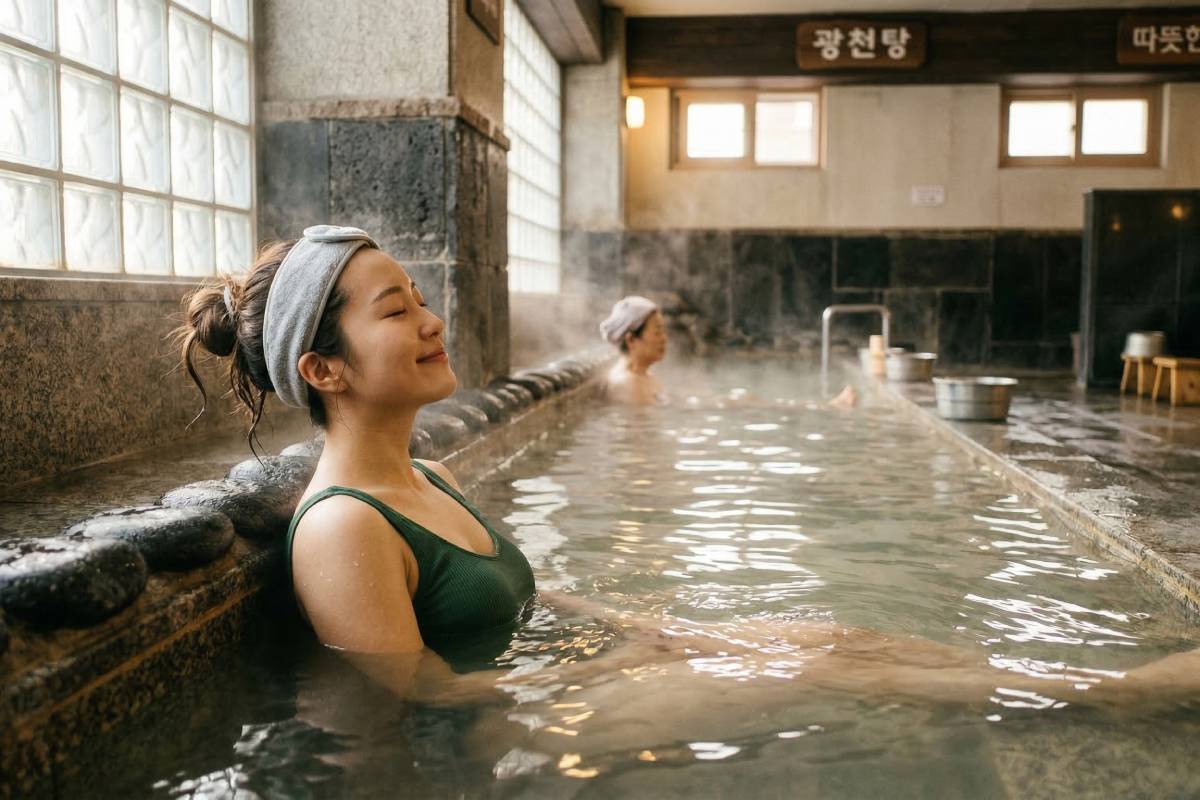
In Korea, communal bathing at a jimjilbang (찜질방) is a deeply normal part of life. Families go together. Friends go together. It is a social ritual as much as a hygiene one. From a young age, Koreans learn that body skin deserves the same level of attention as facial skin.
This cultural foundation matters because it shapes consistency. Korean body care is not something people do when they remember. It is built into the weekly rhythm of life.
Key takeaway: The Korean approach to body skin is a lifestyle, not a routine you follow for 30 days and abandon.
Step 2: The Italy Towel Exfoliation — The Most Important Step You Are Probably Skipping
This is the cornerstone of the Korean body skin care ritual, and it is the detail most Western beauty content completely misses.
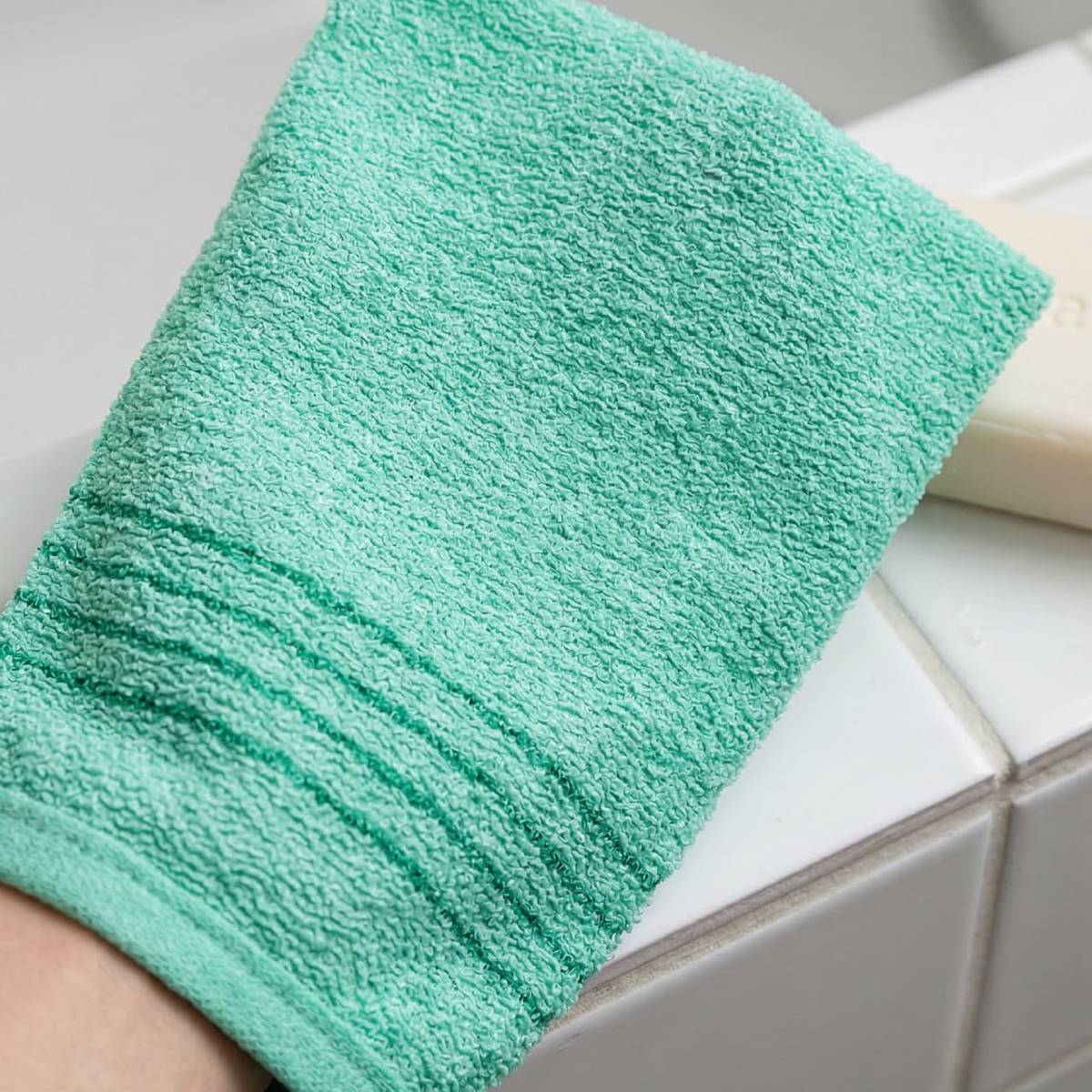
The Italy towel (이태리 타올) is a viscose exfoliating cloth with a slightly abrasive texture. Despite the name, it was invented in Korea in the 1960s and has been a bathroom staple ever since. It is not a loofah. It is not a dry brush. It works differently.
How to Use an Italy Towel Correctly
- Soak in warm water for at least 10 to 15 minutes in a bath, shower, or jimjilbang pool to fully soften the skin
- Do not apply any soap or body wash first. The skin needs to be wet but not slippery
- Using moderate pressure, rub the Italy towel in long, firm strokes down the arms, legs, and torso
- The grey or brown rolls of dead skin (called 때, pronounced “ddeh”) that appear confirm the exfoliation is working
- Rinse the removed skin off thoroughly before moving on to cleansing
How often: Once or twice a week is standard for most Koreans. Over-exfoliating can compromise the skin barrier.
Important: Do not use an Italy towel on freshly broken skin, sunburnt skin, or areas with active irritation.
Types of Towels Used in Korean Body Care
| Towel Type | Material | Exfoliation Level | Best For |
| Italy Towel | Viscose | Medium to Firm | Deep exfoliation (removing dead skin cells) |
| Soft Italy Towel | Softer Viscose | Gentle | Sensitive skin |
| Exfoliating Glove | Nylon | Light to Medium | Daily use |
| Loofah | Natural Gourd | Light | General cleansing |
| Dry Brush | Natural Bristles | Surface Only | Dry brushing (stimulating circulation) |
Understanding the different types of towels used in Korean body care helps you choose the right tool for your skin’s needs. From the firm exfoliation of the Italy towel to the gentle touch of softer alternatives, each option serves a specific purpose, whether it’s deep dead skin removal, daily cleansing, or improving circulation through dry brushing. Selecting the right material and exfoliation level ensures effective results without irritating the skin.
Step 3: Cleansing With Purpose, Not Just Habit
After exfoliation, the skin is primed and receptive. This is when Koreans cleanse, and they are deliberate about the products they choose.
Korean body washes are formulated differently from many Western counterparts. They tend to be:
- Lower in sulphates to avoid stripping the skin barrier post-exfoliation
- Higher in skin-loving actives like niacinamide, green tea extract, and rice water
- pH-balanced to maintain the acid mantle of the skin
Many Koreans also double-cleanse the body during a full ritual, using an oil-based cleanser first to dissolve sunscreen and sebum, followed by a water-based body wash for a thorough finish.
Key takeaway: Cleansing is not just about being clean. It is about preserving the skin’s natural protective layer while removing what does not belong.
Step 4: Targeted Treatment Toning and Essence for the Body
This is where Korean body care diverges most significantly from Western routines.
Just as K-beauty facial routines include toners and essences, many Koreans apply lightweight treatment products to the body after cleansing. These are applied while the skin is still slightly damp to maximise absorption.
Common Treatment Ingredients Used on the Body
| Ingredient | Benefit | Skin Type Best For |
| Niacinamide | Brightens uneven tone, reduces pores | All skin types |
| Centella Asiatica | Calms redness, supports barrier repair | Sensitive, irritated skin |
| Hyaluronic Acid | Deep hydration, plumping effect | Dry or dehydrated skin |
| Fermented Rice Water | Brightening, antioxidant protection | Dull or uneven skin |
| Snail Secretion Filtrate | Regeneration, scar fading | Textured or damaged skin |
| Collagen Peptides | Firmness and elasticity | Maturing skin |
These are not products Koreans necessarily apply every single day. Many rotate them based on season, skin condition, and specific concerns like hyperpigmentation on elbows and knees.
Step 5: Moisturising The Non-Negotiable Final Step
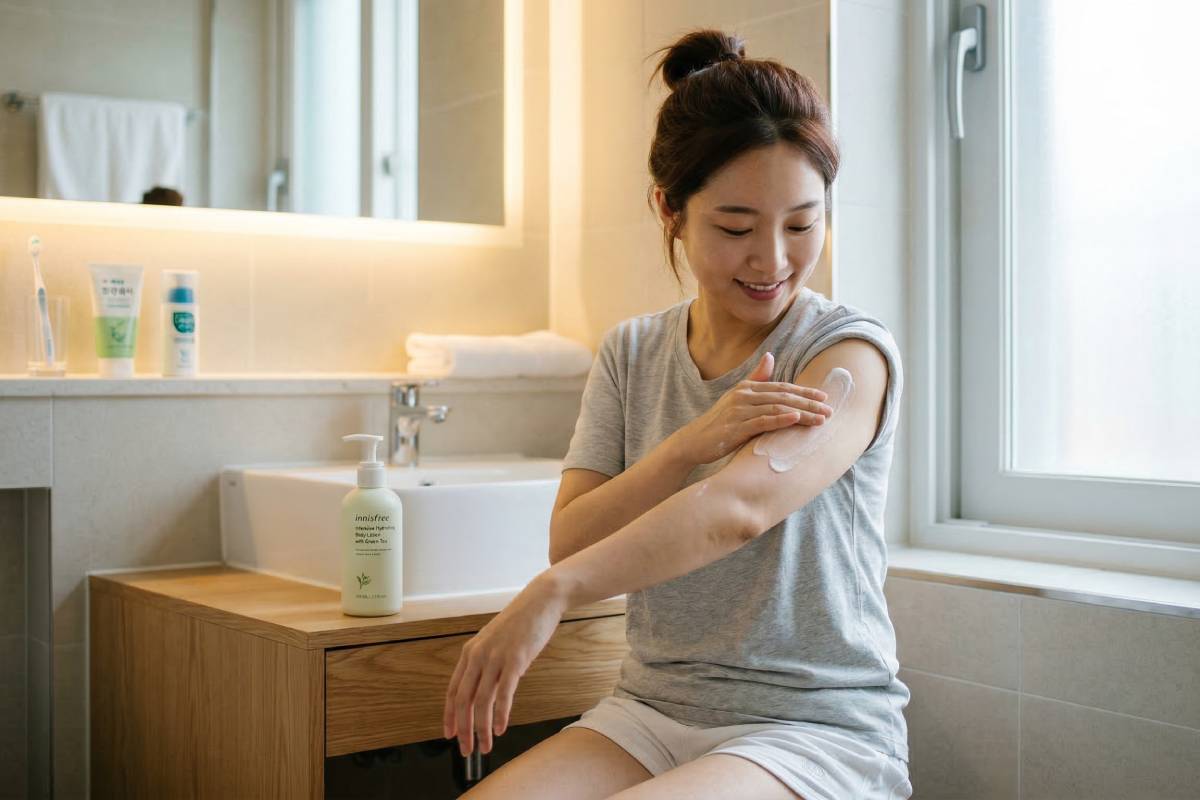
Korean moisturisers for the body lean toward lightweight but highly occlusive formulas. The goal is not to feel greasy. It is to lock in hydration without suffocating the skin.
The “seal while damp” technique is widely practised. You apply moisturiser within 60 seconds of patting the skin dry to trap moisture before it evaporates from the surface.
Popular Korean Body Moisturiser Formats
- Body lotions with ceramide complexes for barrier support
- Sleeping body masks applied at night for intensive overnight repair
- Mist sprays used mid-day to refresh hydration without reapplying lotion
- Oil serums layered under lotion for extra-dry skin in the winter months
Key takeaway: Koreans moisturise immediately after every shower, without exception. The timing matters as much as the product itself.
Step 6: Sun Protection From the Neck Down
This step surprises most people outside of Korea, but it is firmly embedded in Korean skin care culture.
Koreans apply SPF to the body wherever skin is exposed, not just the face. This includes arms, legs, the back of the neck, and the tops of the hands and feet. UV damage is one of the leading causes of uneven skin tone, texture loss, and premature ageing — and it does not discriminate between your face and your forearms.
Korean sunscreens designed for the body tend to have:
- Lightweight, non-greasy textures that absorb quickly
- Broad-spectrum SPF 50+ coverage
- Skin-brightening actives like vitamin C or niacinamide built in
Key takeaway: If you are working on skin tone and texture but skipping SPF on your body, you are working against yourself every time you step outside.
Step 7: The Inside-Out Philosophy Diet, Collagen, and Hydration
Korean body skin care does not stop at what goes on the skin. What goes into the body is considered equally important.
What Koreans Eat and Drink for Skin Health
- Fermented foods like kimchi, doenjang (fermented soybean paste), and makgeolli (rice wine) support gut health, which directly influences skin clarity and tone
- Collagen supplements and drinks are widely consumed. Powdered collagen sachets added to water or coffee are a mainstream daily habit, not a niche health trend
- Bone broths and collagen-rich soups like gomtang and seolleongtang are regular parts of the Korean diet
- High water intake is treated as foundational. Dehydrated skin cannot hold moisture regardless of how many products you apply
- Green tea consumed daily for its antioxidant and anti-inflammatory properties
This inside-out approach creates a compounding effect. Products work better on skin that is already well-nourished from within.
The Full Korean Body Skin Care Routine at a Glance
| Step | Action | Frequency |
| 1 | Italy towel exfoliation after soaking | 1 to 2 times per week |
| 2 | Oil cleanse to remove sunscreen and sebum | Daily or as needed |
| 3 | pH-balanced body wash | Daily |
| 4 | Treatment essence or serum on damp skin | 3 to 5 times per week |
| 5 | Body moisturiser within 60 seconds of drying | Daily |
| 6 | Broad-spectrum SPF 50+ on exposed areas | Every morning |
| 7 | Collagen supplement and adequate hydration | Daily |
Conclusion: It Is a System, Not a Single Step
The Korean approach to body skin care works because every step supports the next. Exfoliation prepares the skin to absorb. Cleansing preserves what exfoliation reveals. Moisture seals in the work. Sun protection protects it from being undone. And a nourishing diet ensures the skin has the raw materials to regenerate properly.
The biggest takeaway is this: Koreans do not treat body skin care as a luxury. They treat it as maintenance — as natural and routine as brushing teeth.
You do not need every product on this list to start. The Italy towel and a good moisturiser applied immediately after your shower will already put you ahead of most routines.
If you are based in Australia and want professional guidance on building a Korean-inspired body skin care routine tailored to your skin type, the team at Australian Beauty Clinic can help you identify the right steps and products for your skin goals.
Which step in this routine do you think has been the biggest missing piece in your own skin care habits?